
The Evolution of Whale Images
The WhaleThis flow follows the whale as it moves through captivity, museum display, industrial evidence, and living observation.
increasing Bearing strength in each event
 decreasing
Bearing strength in each eventdecreasingThe Captive Attraction
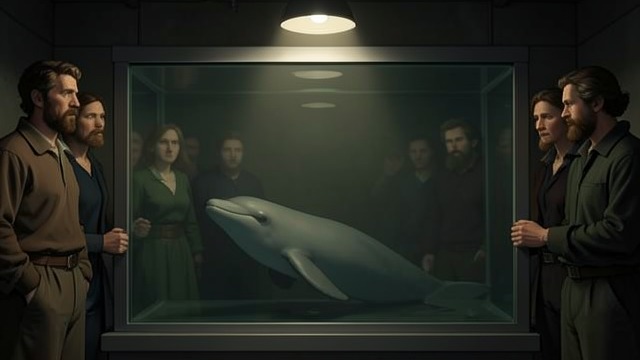
A Whale Behind Glass
A public spectacle
Live belugas are brought to aquariums and displayed to urban crowds, often in inadequate tanks and unsuitable water. The public’s curiosity turns the animal into a novelty.
Pity after display
Deaths and distress reveal the cost of treating a whale as an attraction. The audience is invited to look, but the captive animal’s environment makes the encounter ethically troubling.
A Whale in the Museum
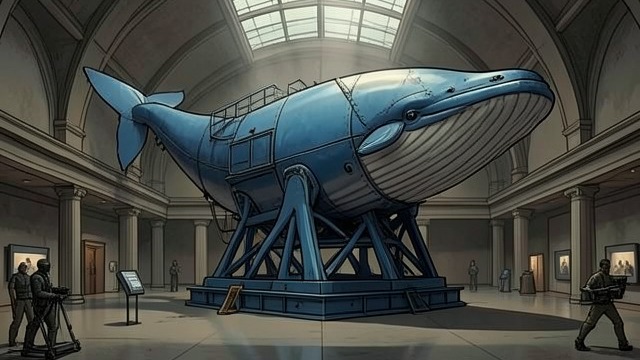
A Model for the Public
A constructed body
The Blue Whale Model at the Natural History Museum offers visitors a large-scale image of an animal no one had yet seen fully alive underwater. Its form depends on measurements, casts, and human reconstruction.
A useful error
The model helps make whales imaginable, but it also preserves the distortions of carcasses and incomplete knowledge. The museum becomes a place where wonder and misrepresentation coexist.
The Whale as Material
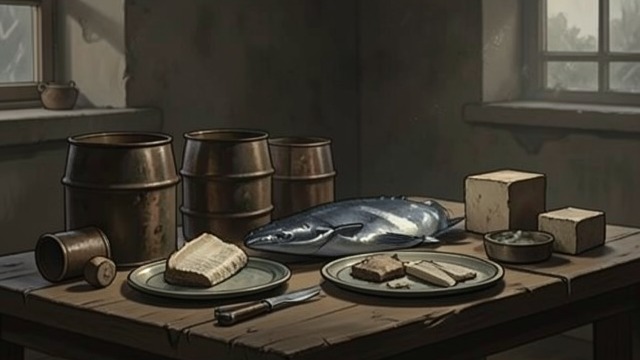
An Animal Rendered into Goods
Every part used
Whales become oil, meat, baleen, lubricants, and industrial ingredients. Commercial images emphasize the yield of a body rather than the animal’s life.
A human system exposed
The products enter domestic routines so widely that consumers may not recognize their origin. The whale becomes an invisible component of modern life and its costs.
The Whale on Film
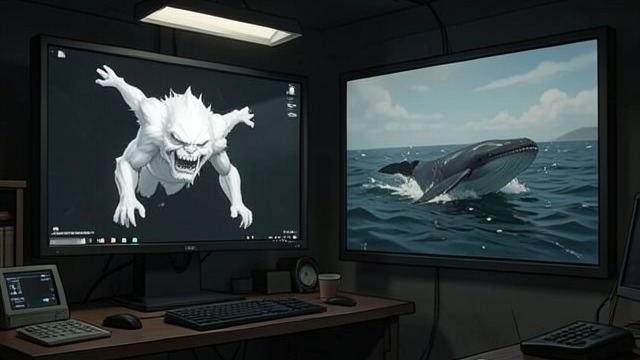
A Changed Screen Image
Fiction and killing
Film adaptations present the whale as a dramatic monster, while documentary images show real animals being hunted. Both images bring whales to mass audiences in newly vivid forms.
A moral disturbance
The screen can turn a killing into spectacle, but it can also make the animal’s death difficult to ignore. Public perception begins to shift toward concern.
The Living Whale Watch
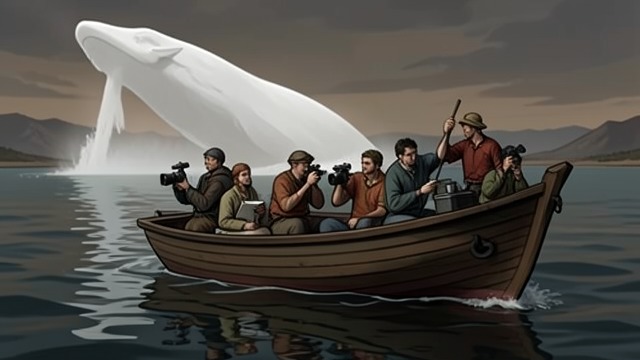
Looking Without Hunting
A different encounter
Whale-watching boats seek living animals rather than carcases. Identification photographs and field notes make individual whales familiar to visitors and researchers.
Distanced but not neutral
Tourism still places vessels and observers near whale habitat. Rules about approach acknowledge that seeing a whale must not become another form of harassment.
From the mid-nineteenth century
During the early twentieth century
During the peak decades of industrial whaling
In the 1950s and 1960s
By the time Hoare joins whale watches
